
Heritage Collection
Tunisian History Written in Ceramics
400 pieces of pottery, 4 centuries of tiles, and a family obsession.
Tunisian History Written in Ceramics
400 pieces of pottery, 4 centuries of tiles, and a family obsession.
There are hotels where you admire the decoration, and there is Dar Ben Gacem, where the decoration tells the history of Tunisia. The ceramics collection on display, is a witness of centuries of Mediterranean migrations, cultural influences, artisanal evolving trends in colors, shapes, patterns and meaning. In other words, you can spend a night at Dar Ben Gacem and accidentally take a course in Tunisian history, but thankfully without an exam.
For more than 40 years, Alia and Hmida Ben Gacem have been collecting Tunisian pottery; what started as an appreciation for the craftsmanship, became a respectable obsession. The collection now numbers more than 400 pieces, with the oldest dating back approximately 100 years. When Alia and Hmida traveled to Europe, sometimes they find Tunisian pottery that traveled away from home. Then the only reasonable thing to do is to convince it to come home; and that was their auto-proclaimed mission.
Alia and Hmida, are not exactly ‘art collectors’; the collection is not an investment, they just decided to be the ‘saviors’ of the labor of love of generations of Tunisian potters and ceramists, especially those from Nabeul. Each piece was made by hands of people, who choose the colors, made the imperfections, mastered the techniques, designed the shapes… each and every piece, tells a story of the land, and united the puzzle is complete.
In Tunisia for centuries, people have settled, traded, traveled, married, migrated; some brought ideas, some took ideas, and some ideas merged. Craftsmen did what craftsmen do best; they borrowed, adapted, experimented and made things their own. This is where ceramics become fascinating; patterns can reveal influences, colors can reveal changing tastes, shapes can reveal techniques and traditions, decorative motifs can carry echoes of places far beyond Tunisia.
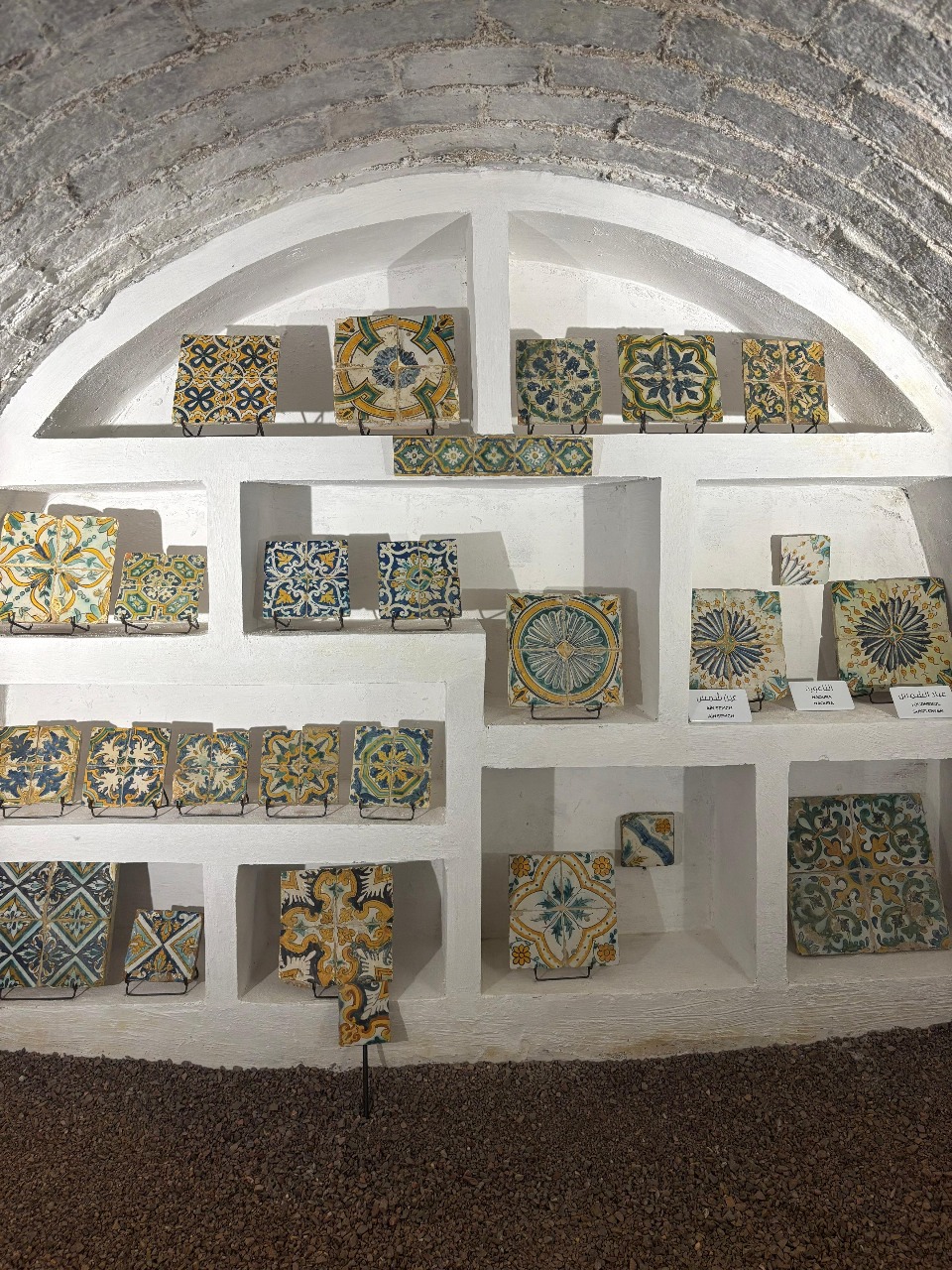
Then there is ‘Dehliz el Zliz’, the basement of Dar Ben Gacem -Kahia-, a space that was once used to store food, today houses Mohammed Massaoudi’s collection of ceramic tiles dating from the 15th to the 19th centuries. In Massaoudi’s mind, these tiles are his children; he spent years collecting them, caring for them, and protecting them. And like any parent who has finally agreed to let their children leave home, he needed much reassurance that they would be looked after properly.
When the time came for the tiles to leave Massaoudi, they came to Dar Ben Gacem-Kahia-, they were given a new home, visitors, light, and most importantly, people who would continue to care about them.
The collection of tiles, are evidence of craftsmen learning from one another, and evidence of Tunisia’s ability to absorb outside influences without simply becoming a copy of somewhere else. This is perhaps what makes Tunisian ceramics so captivating, they are simultaneously local and cosmopolitan. They belong to Tunisia, but their story does not begin or end at Tunisia’s borders. At Dar Ben Gacem you will understand Tunisia, not through monuments, dates of war and peace, or famous names; but through the hands of ordinary craftsmen who turned cultural influences into something extraordinary.
Dar Ben Gacem collections, allows you to see history as a journey of Mediterranean influences meeting local traditions. Andalusian traditions leave their traces, Ottoman influences appear, Islamic artistic traditions evolve, and local craftsmen reinterpret everything they encounter, and made Tunisian. You will realize that Tunisian history can be summarized in one sentence: ‘they came, were not liked, then they became family.’
Perhaps this is why Alia and Hmida kept collecting, and why Massaoudi couldn’t simply let his tiles go. These objects are more than old things, they carry stories, and once those stories disappear, no amount of beautiful architecture can bring them back. At Dar Ben Gacem, we proudly inherited the inconvenient responsibility of keeping some of those stories alive.
Visit us, and remember that you are looking at Tunisia, one ceramic piece at a time.