
Culinary Retreat · 2027
Taste Tunisia, a 4-day culinary retreat
Taste Tunisia, a 4-day culinary retreat
In 2027, Dar Ben Gacem is planning culinary retreats for people who believe that the best way to understand Tunisia is not by reading about it, but by eating it, cooking it and arguing about it around a dining table. For 4 days, you will forget the fancy restaurant version of Tunisian food, and experience home cooking. No complicated menus, with words that need AI support, and no tiny portions arranged with tweezers; just the food Tunisians eat at home.
And of course, you will meet the people who make it all happen, because food doesn't begin in a restaurant, it begins with people; farmers, fishermen, butchers, women who make handmade pasta and neighborhood cooks who have perfected the mysterious Tunisian art of knowing exactly how much spice to add; if you ask ‘how much’ the answer is always ‘your eye is your scale’, which is every Tunisian mum’s answer to any kitchen ‘how much’.
Forget hotel buffets, your Tunisian breakfast will be a good old Shakshuka; tomatoes, peppers, eggs, olive oil and spices, cooked until everything becomes impossible to resist. Shakshuka has deep roots in North African cooking and comes in many regional variations. In Tunisia, it is sometimes breakfast, sometimes lunch, sometimes dinner and, depending on the circumstances, possibly the answer to every question. Of course, everyone has an opinion about how it should be made; too many tomatoes, too few peppers; eggs mixed in or left whole; there are families who have probably stopped speaking to each other over this!
In Tunisia, a family lunch means a Tabsi of couscous. Our couscous workshop will take you through the journey of preparing the grains, steaming them, building the sauce and understanding how different ingredients create completely different couscous experiences. You'll learn from people who know the process because they've been doing it for years for their families, not because they watched a 12-minute YouTube video, nor because they went to a big-name hospitality school. Couscous is not just a cooking lesson, it’s a social experience, and you can’t make couscous until everyone is sitting around the same table. There are dozen types of Tunisian couscous, depending on region, seasonal vegetables and occasions; you may extend your stay, if you wish to try them all.
For dinner, we love simplicity without compensating taste; Ojja, bread, olive oil, Harissa and maybe a salad, preferably decorated with olives and tuna; you can also mix them all and make a Tajin. Simple, generous Tunisian food, demonstrating the genius of Tunisian home cooking: a few ingredients, plenty of flavors and absolutely no need to impress anyone; just be in peace and enjoy the tastes!
Then there is pasta, we Tunisians have an extraordinary love affair with pasta. Tunisian pasta is not shy, nor pale, it is supposed to be red, rich and spicy. Our pasta should carry the color of tomato, the warmth of Harissa and the smell of a kitchen where someone has been cooking, since before you arrived. Tunisian pasta has its own traditions, sauces and combinations, and if someone tells you that Tunisian pasta should be mild, question their credentials.
A Tunisian culinary story, says that tomatoes met pasta in Tunisia, before the combination traveled across the Mediterranean to Sicily, and eventually became part of what the world thinks of as Italian cuisine. Whether you believe this particular version of history is another matter, but it makes for an excellent argument over lunch. During the retreat, we'll explore the stories behind these ingredients, and perhaps leave you to decide who really deserves the credit. We don't have to agree but we can still enjoy Makrouna Tounsia together!
During this retreat, we also like you to explore street food of the Medina. This is where you discover the other side of Tunisian cuisine; fast, inexpensive and deeply satisfying. First Lablabi; chickpeas, bread, garlic, cumin, Harissa, olive oil, and why not… an egg; that’s it. Lablabi is the kind of food that looks like nothing special until you eat it, and then you wonder why someone is charging €18 for a bowl of soup in Europe. There are also approximately 17 opinions about what’s the correct way to eat Lablabi, you may extend your stay to try them all, and decide for yourself.
Then there is Kaftaji; fried vegetables, eggs, potatoes, peppers, pumpkin and whatever combination makes the cook happy. Everything gets chopped, mixed and seasoned into a Tunisian chaos in one plate; but does it need to look good or it just needs to taste good??
And then there is chapati; the Tunisian version of chapati is a beloved street-food sandwich, packed with ingredients and flavor, and it carries a particularly interesting story of migration and cultural exchange. We have no idea how it landed in the Medina, but somehow Indian cuisine got embraced, adapted and Tunisified, because that’s what we do in Tunisia. In fact, our whole history can be summarized in ‘They came, we did not like them, then they became family!’ and that applies to food as well. We strongly encourage you to eat Tunisian street food, before beginning your PhD in culinary anthropology.
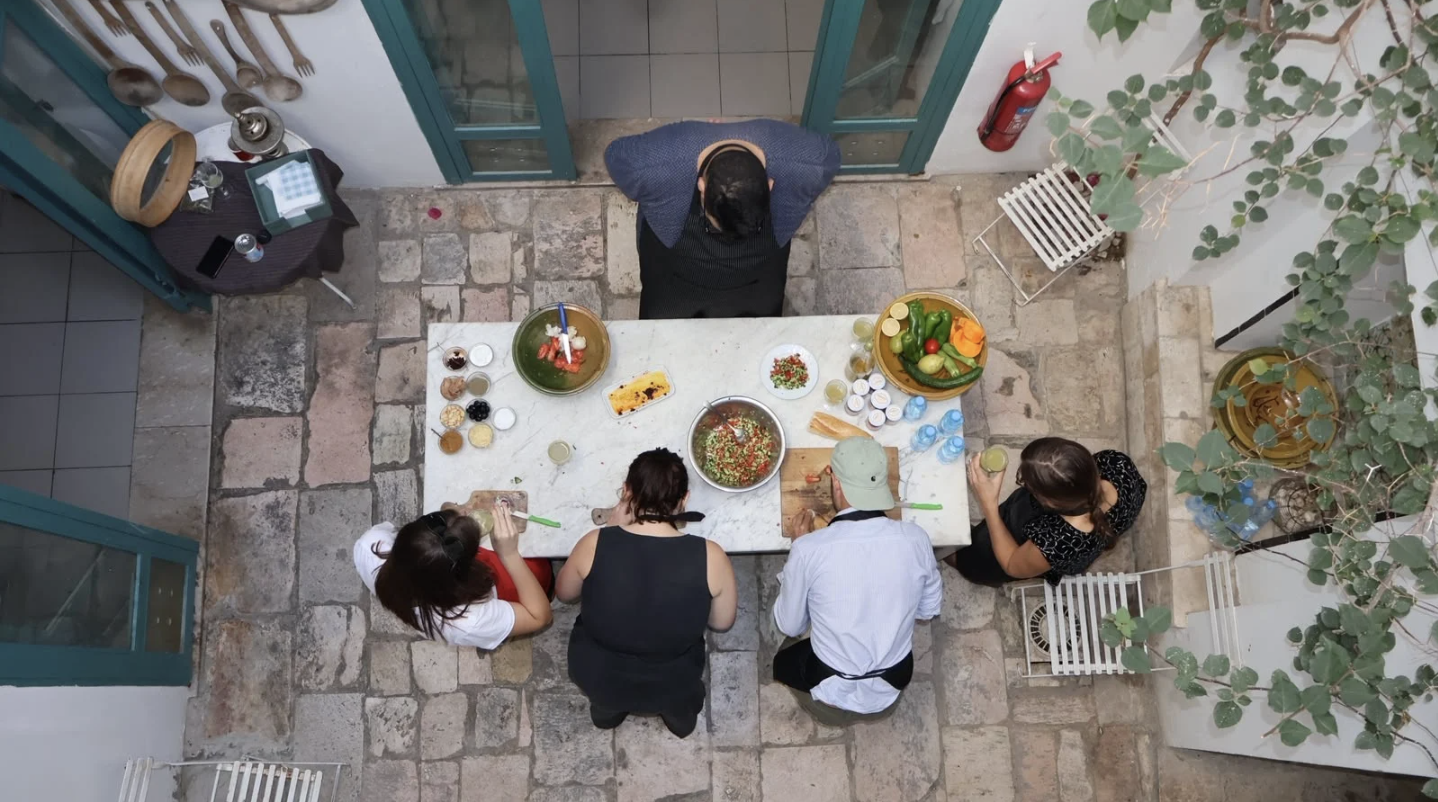
During this retreat, you'll learn Tunisian spice combinations, discover the secrets of Harissa and work on your knife skills, you will chop, you will stir, you will taste and you will probably be told that you are doing something wrong. Somewhere between the cumin, coriander, caraway, turmeric, chilli and garlic, you will discover that Tunisian cooking is less about following a recipe and more about developing instinct. Your first attempts may look slightly strange, but don't worry; we will call it artisanal.
This isn't a cooking class; it's a way into Tunisia. For 4 days, you'll experience Tunisia through its kitchens and its people, the neighborhood cooks who turn a few humble ingredients into something magical. Join our culinary retreat, come hungry, bring comfortable shoes and curiosity; leave your measuring cups at home, we'll take care of the spices! Any group of 5 people or more are welcome, and we have special plans for the little cooks.